Asymmetrical Style Seamless Patterns 04: A Review of Modern Vector Assets
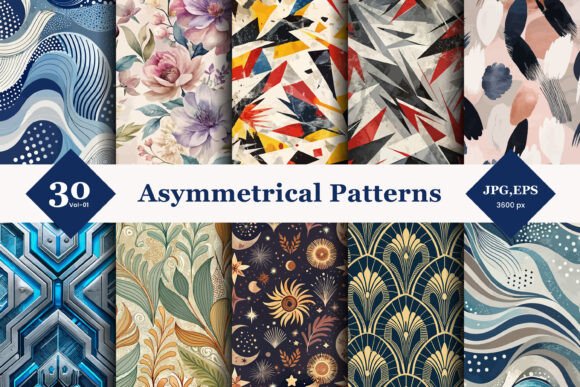
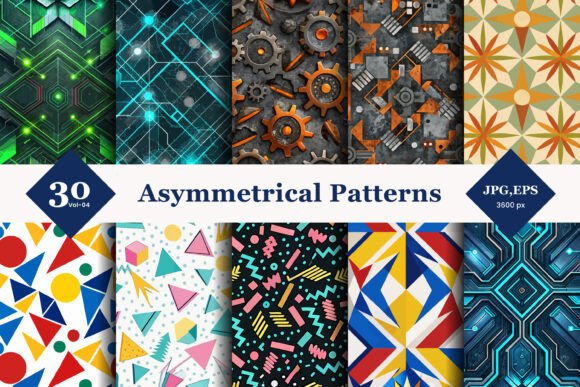
In the landscape of contemporary graphic design, the demand for visual assets that balance structure with organic movement is higher than ever. Designers and brand strategists are increasingly moving away from rigid, symmetrical grids in favor of compositions that feel dynamic yet controlled. Asymmetrical Style Seamless Patterns 04 emerges as a targeted solution for this aesthetic shift. This collection provides thirty distinct patterns characterized by subtle imbalances, delicate lines, and an understated elegance that appeals to modern branding needs. For professionals seeking high-quality vector resources that can scale without loss of fidelity, understanding the practical application and technical specifications of such a pack is essential.
The Aesthetic Philosophy Behind Asymmetry
To evaluate whether this asset pack fits your workflow, it is helpful to first understand the design language it employs. Symmetry often communicates stability, tradition, and formality. In contrast, asymmetry introduces tension, movement, and a sense of curated randomness. It suggests a hand-crafted quality even when generated digitally. Asymmetrical Style Seamless Patterns 04 leverages this psychological effect. The patterns do not rely on heavy, bold graphics but rather on nuanced line work and spatial arrangement. This makes them particularly suitable for industries where sophistication is key—such as luxury goods, high-end textiles, and minimalist tech branding.
The "sleek" descriptor used in the product description is not merely marketing fluff; it reflects the actual visual weight of the designs. These patterns are designed to be background elements or texture layers that enhance a composition without overpowering primary content. They offer a backdrop that feels intentional and refined, avoiding the chaotic look often associated with busy patterns. For a freelance designer working on a packaging project for a premium skincare line, for example, these patterns provide an immediate elevation of the visual hierarchy through their delicate and balanced imperfection.
Technical Specifications and File Flexibility
From a technical standpoint, the usability of any digital asset depends heavily on its file format and resolution. This collection addresses the two most critical formats for both print and digital media: EPS vectors and high-resolution JPGs.
- EPS Vector Files: The inclusion of EPS files is a significant strength. Vectors allow for unlimited resizing without pixelation, which is crucial for projects that may require scaling from a business card to a large-format banner. For entrepreneurs and small business owners who need versatility across different touchpoints, having the source vector data ensures that the pattern remains crisp regardless of the output medium.
- High-Resolution JPGs: Providing 300 DPI JPG files caters directly to print-ready requirements. Many designers prefer to have raster versions ready for quick placement in Photoshop or Illustrator layouts where vector editing might slow down the process. The 300 DPI standard ensures that when these patterns are printed on textiles, brochures, or packaging materials, they maintain sharpness and clarity.
This dual-format approach reduces friction in the design workflow. It allows creative directors to choose the appropriate tool for the job at hand, whether that involves precise vector manipulation or rapid raster compositing. The instant download feature further supports agile teams who need to integrate these assets into client presentations or production pipelines without delay.
Practical Applications Across Industries
The versatility of Asymmetrical Style Seamless Patterns 04 makes it relevant across a broad spectrum of professional fields. Its understated elegance positions it well for several specific use cases:
- Luxury Packaging: Brands selling cosmetics, perfumes, or artisanal foods often struggle to differentiate themselves visually. A subtle, asymmetrical pattern can add depth and tactile appeal to box designs or wrapping paper, suggesting exclusivity and attention to detail.
- Refined Textiles: Fashion designers and interior decorators looking for fabric prints will find value in the seamless nature of these patterns. The delicate lines translate well to woven or printed fabrics, offering a modern alternative to traditional floral or geometric motifs.
- Digital Branding: For bloggers, publishers, and web developers, these patterns can serve as sophisticated backgrounds for websites, email newsletters, or social media graphics. They provide visual interest without distracting from the core message or text content.
- Corporate Identity: While often associated with creativity agencies, larger corporations also use subtle patterns in annual reports, internal documents, and presentation decks to break up white space and reinforce brand aesthetics in a non-intrusive way.
Evaluating Quality and Consistency
When assessing a pack of thirty unique patterns, consistency in style is just as important as individual quality. If one pattern feels significantly more complex or differently weighted than the others, it can disrupt the coherence of a brand system. Based on the description of "subtle imbalances" and "delicate lines," it appears that this collection maintains a unified visual voice. This uniformity is vital for marketers and brand managers who need to ensure that all visual assets align with a specific tone of voice.
The emphasis on "understated elegance" also suggests a restraint in color palette and line thickness. This is a practical advantage because it makes the patterns easier to adapt. Designers can overlay these patterns with various brand colors or adjust opacity levels to create custom variations without clashing with existing design elements. This flexibility extends the long-term value of the purchase, allowing users to get more out of the initial investment by creating multiple derivative designs.
Considerations for Potential Users
While the strengths of Asymmetrical Style Seamless Patterns 04 are clear, it is important to consider who might not benefit as much from this specific resource. If your design projects require bold, loud, or highly decorative graphics—such as children’s book illustrations, festival posters, or discount retail signage—these patterns may be too subtle. They are optimized for a mature, professional aesthetic. Serious hobbyists or students learning basic design principles might also find the nuance of asymmetry challenging to implement effectively without guidance, though studying how these patterns achieve balance could be educational.
Additionally, while the vector files offer scalability, users should be aware of the complexity of the paths. Highly detailed delicate lines can sometimes result in larger file sizes or slower rendering times in certain software environments. It is advisable to test the performance of the vectors in your specific workflow before committing to large-scale print runs.
Conclusion on Value and Utility
Ultimately, Asymmetrical Style Seamless Patterns 04 represents a solid investment for professionals who prioritize refinement and modern aesthetics. The combination of thirty unique designs, coupled with robust file formats (EPS and 300 DPI JPG), offers a comprehensive toolkit for enhancing visual projects. Its suitability for luxury packaging, refined textiles, and modern branding underscores its relevance in today’s market.
For freelancers, agency designers, and small business owners looking to elevate their visual communication, this pack provides the necessary tools to create sophisticated, scalable, and cohesive designs. By focusing on quality, flexibility, and a timeless aesthetic, it addresses the common pain points of finding versatile background assets that do not compromise on style. Whether used for a single client project or integrated into a broader library of brand assets, these patterns offer reliable performance and enduring stylistic appeal.