Evaluating 8 Floral Patterns: A Deep Dive into High-Resolution Watercolor Rose and Peony Designs
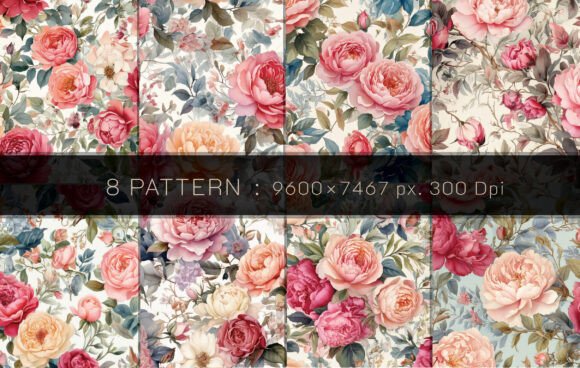
In the realm of digital design, print production, and creative asset acquisition, the distinction between a standard image and a high-fidelity artistic resource is often defined by resolution, color depth, and compositional complexity. One specific category that has gained significant traction among designers, scrapbookers, and interior decorators is the 8 Floral Patterns collection featuring watercolor roses and peonies. This particular set, characterized by its 9600 × 7467 pixel dimensions and 300 DPI (dots per inch) resolution, represents a premium tier of visual content. For professionals and hobbyists alike, understanding the technical and aesthetic implications of these assets is crucial for making informed purchasing or usage decisions.
The core appeal of this collection lies not just in the subject matter—roses and peonies—but in the execution. The images are described as exquisite floral illustrations capturing delicate beauty in various shades, including pink, red, orange, and white. However, to truly evaluate whether this specific product fits your workflow, one must look beyond the marketing imagery and analyze the practical applications, technical specifications, and comparative advantages of such high-resolution watercolor assets.
Technical Specifications and Resolution Analysis
When evaluating digital art for commercial or large-scale personal use, resolution is the primary metric of value. The 8 Floral Patterns set boasts a massive file size with dimensions of 9600 × 7467 pixels. To put this into perspective, most standard stock photography sites offer images around 3000–5000 pixels on the longest side. An image of this magnitude allows for extreme flexibility in scaling without compromising clarity.
- Print Capability: At 300 DPI, which is the industry standard for high-quality offset and digital printing, this image can be printed at approximately 32 inches by 25 inches with zero visible pixelation. This makes it suitable for large-format prints, such as wall murals, canvas wraps, or high-end packaging.
- Cropping Flexibility: The high resolution provides ample room for cropping. Designers can extract individual flowers, clusters, or background elements from the main composition without losing detail. This is particularly useful when creating custom patterns or isolating specific botanical elements for collage work.
- Future-Proofing: As display technologies evolve toward higher densities (such as Retina displays or 4K/8K monitors), having assets with excess resolution ensures that your designs remain crisp across all modern viewing platforms.
While some may argue that such high resolutions are overkill for web-only use, the versatility of the 8 Floral Patterns data suggests that these files are intended for a hybrid workflow where digital and physical outputs intersect.
Aesthetic Composition and Artistic Style
Beyond the raw numbers, the artistic merit of the 8 Floral Patterns collection is defined by its adherence to traditional watercolor aesthetics while maintaining digital precision. The description highlights "intricate petals and subtle tonal variations," which are critical for achieving realism. Unlike vector-based floral designs, which offer clean lines but can appear flat, watercolor textures introduce organic randomness and softness.
Color Palette and Emotional Resonance
The specified palette—pink, red, orange, and white—offers a warm, vibrant spectrum that appeals to a broad audience. These colors evoke feelings of romance, spring, and natural abundance. The inclusion of both red and orange tones adds a layer of dynamism, preventing the composition from feeling too static or purely romantic. This variety allows the pattern to function in diverse contexts, from wedding invitations to summer-themed apparel.
The "soft pastel tones" mentioned in the product overview suggest a gentle handling of saturation. In design theory, overly saturated colors can clash with text or other graphical elements. By keeping the tones soft yet distinct, these patterns serve as excellent backgrounds that do not compete with foreground content. This is a key consideration for graphic designers who need to overlay typography or logos on floral backdrops.
Foliage and Structural Balance
A common pitfall in floral design is an imbalance between the flowers and the surrounding greenery. The 8 Floral Patterns set addresses this by incorporating "rich green foliage" that adds contrast and structure. This foliage does more than fill space; it frames the blossoms, guiding the viewer’s eye through the composition. The natural balance described implies that the leaves are rendered with similar attention to detail as the petals, ensuring that no part of the image feels like an afterthought.
Comparative Evaluation: Watercolor vs. Alternatives
To determine if the 8 Floral Patterns are the right choice, it is helpful to compare them against alternative styles commonly found in the market.
Watercolor vs. Vector Graphics
Vector graphics (SVG/EPS) are infinitely scalable and typically have smaller file sizes. They are ideal for logo design and simple iconography. However, vectors lack the nuanced texture of watercolor. If your project requires a sense of hand-crafted elegance, soft edges, or organic imperfection, the 8 Floral Patterns will outperform vector alternatives. Conversely, if you need to recolor entire sections of the image dynamically, vectors are superior because they allow for easy manipulation of shape attributes.
Watercolor vs. Photorealistic Imagery
Photorealistic images capture light and shadow with photographic accuracy but can sometimes feel sterile or overly busy. The illustrated nature of the 8 Floral Patterns offers a curated reality. The artist has likely enhanced certain features (like petal translucency or leaf veins) to create an idealized version of nature. This makes the images more versatile for branding, as they carry a consistent artistic voice that photographs might lack due to varying lighting conditions in different shots.
Single Image vs. Pattern Packs
Many resources sell single high-resolution images. The value proposition of the 8 Floral Patterns pack lies in the variety. Having eight distinct compositions allows for thematic consistency across a multi-page document or a series of products. For instance, a designer creating a wedding stationery suite could use different patterns for the invitation, RSVP card, and menu, creating a cohesive yet varied look. Buying individual images separately would likely result in higher costs and potentially inconsistent artistic styles.
Practical Use Cases and Applications
Understanding where these assets shine helps clarify their utility. Here are several scenarios where the 8 Floral Patterns excel:
- Packaging Design: Cosmetic brands, tea companies, and luxury goods often use floral motifs to convey quality and natural ingredients. The 300 DPI resolution ensures that fine details are preserved even when printed on small labels or boxes.
- Textile and Fashion: While fabric printing often uses seamless tiling, high-res standalone images can be used for direct-to-garment printing on statement pieces or for designing custom scarves where a central focal point is desired.
- Digital Backgrounds: With dimensions nearly 10,000 pixels wide, these images are perfect for ultra-wide monitor wallpapers or as backgrounds for video conferencing screens, providing a professional yet pleasant visual environment.
- Invitation and Stationery: Weddings, baby showers, and formal events benefit from the sophisticated tone of watercolor roses. The light-toned background mentioned in the description ensures that ink legibility remains high when text is added.
Limitations and Considerations
No asset is universally perfect. Potential buyers should consider a few limitations before integrating the 8 Floral Patterns into their projects.
File Management: Images of this resolution will result in very large file sizes (likely exceeding 50MB per JPG). Users need sufficient storage capacity and powerful hardware to edit these files smoothly in software like Photoshop or Illustrator. Slower computers may struggle with real-time rendering of layers on such high-density canvases.
Color Mode Conversion: Digital screens use RGB color mode, while printing uses CMYK. When converting these high-res RGB files to CMYK for print, colors may shift slightly. Designers must be prepared to adjust hues manually to ensure the final print matches the screen preview, especially for the vibrant reds and oranges mentioned.
Licensing Constraints: It is essential to verify the licensing terms associated with the 8 Floral Patterns. Some high-resolution assets are restricted to personal use only, meaning they cannot be used in products sold to third parties. Always review the end-user license agreement (EULA) to avoid legal complications.
Decision Framework: Is This Right for You?
Selecting the right visual asset depends on your specific project requirements. The 8 Floral Patterns collection is an excellent investment if:
- You require high-quality print materials larger than standard poster size.
- You prefer an artistic, hand-painted aesthetic over rigid geometric or photographic styles.
- You need multiple coordinated designs for a comprehensive brand identity or event theme.
- You have the technical infrastructure to handle large, high-resolution files.
Conversely, you might look elsewhere if:
- Your project is strictly web-based with strict load-speed constraints (where optimized, smaller JPEGs or SVGs are preferred).
- You need editable vector shapes for extensive customization.
- Your budget is limited and you only require a single, low-resolution placeholder image.
In conclusion, the 8 Floral Patterns offering represents a robust solution for creatives seeking depth, detail, and versatility in floral design. By combining technical excellence with artistic grace, these watercolor roses and peonies provide a strong foundation for projects that demand sophistication and visual impact. Careful evaluation of your technical needs and aesthetic goals will ensure that this resource serves your creative vision effectively.